Walking a site in Maple Ridge, you quickly learn that the soil rarely matches what the regional mapping suggests. We have seen projects where the transition from glacial till to soft alluvium happens over a distance of twenty meters, especially east of 224th Street toward Kanaka Creek. With an average annual precipitation of 1,400 mm and a shallow water table on the floodplain side, designing a footing that ignores seasonal moisture variation is a gamble. The city sits at the edge of the Fraser River's historical meander belt, and those deep silt lenses demand more than a textbook bearing capacity equation. Our team runs the site investigation, adjusts the ground model with data from CPT testing when access allows, and delivers a foundation recommendation that accounts for differential settlement from the start.
In Maple Ridge, settlement governs shallow foundation design more often than bearing capacity failure—and the difference between a successful job and a call-back is usually one additional borehole in the right location.
Scope of work
Area-specific notes
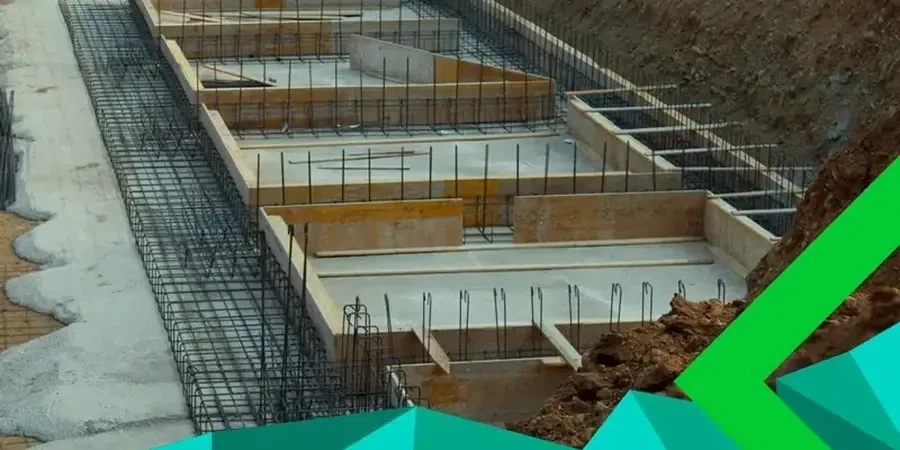
The most common mistake we see in Maple Ridge is a contractor pouring strip footings directly on undisturbed soil that looks dry and competent in August but turns to mush by November. That seasonal strength loss, combined with the silty matrix common in the Haney and Hammond areas, can reduce the undrained shear strength by thirty percent or more. If the geotechnical report did not specify a working platform or recommend a mud slab after excavation, the concrete ends up mixed with softened subgrade, and the footing loses the design bearing capacity before the walls even go up. A proper Proctor test on the pad material and a clear specification for compaction control during wet weather can prevent a costly underpinning job twelve months later.
Standards used
NBCC 2015 – Part 4 Structural Design (foundation provisions), CSA A23.3:2014 – Design of Concrete Structures (footing reinforcement), BCBC 2018 – Division B, Part 9 (small buildings) and Part 4 (engineering design), Canadian Foundation Engineering Manual, 4th Edition (bearing capacity & settlement methods), ASTM D2488 – Description and Identification of Soils (visual-manual procedure)
Linked services
Geotechnical Site Investigation for Footings
Targeted drilling, test pitting, and sampling to map the bearing stratum across the building footprint. Includes groundwater monitoring and laboratory index testing to classify the soil per the Unified Soil Classification System.
Bearing Capacity and Settlement Analysis
Calculation of ultimate and allowable bearing pressures using limit equilibrium methods, supported by consolidation or elastic settlement estimates where compressible layers are identified. We provide factored resistances compatible with Limit States Design under the NBCC.
Foundation Construction Review and Inspection
Field review during excavation to confirm the ground conditions match the design assumptions. We check subgrade preparation, reinforcing steel placement, and concrete placement, issuing a conformance letter for the municipality upon completion.
Typical parameters
Q&A
When does Maple Ridge require a geotechnical report for a single-family home foundation?
The District of Maple Ridge typically triggers a geotechnical review when the building is on a slope steeper than 15 percent, within 30 meters of a watercourse, or in areas mapped as having moderate to high liquefaction susceptibility. Even on flat lots, the building official may request a letter confirming bearing capacity if the site is known to have soft or fill soils.
What is the typical cost range for shallow foundation design in Maple Ridge?
For a standard single-family residential project, the fee for the geotechnical investigation and foundation design report falls between CA$2,480 and CA$4,700, depending on the number of boreholes required and the complexity of the soil profile. Larger commercial or multi-family projects exceed this range.
How do you handle the high water table in the Albion and Hammond areas?
We design the footing subgrade with a granular working platform that remains stable under pumping or during wet weather. The bearing capacity calculation uses the effective unit weight of the soil below the water table, and we typically specify a mud slab or a lean concrete seal to protect the bearing surface before placing the structural footing.
Can you design a shallow foundation on fill soil that has been on the property for years?
It is possible, but only after characterizing the fill through test pits or boreholes. Uncontrolled fill in Maple Ridge often contains organics, stumps, or loose pockets that cause differential settlement. If the fill is thin, we usually recommend removing it and bearing on competent native soil. For thicker fills, we may propose a Improvement strategy or switch to a deeper foundation system.
How long does a shallow foundation investigation and design take?
For a typical residential project, the field investigation takes one day, and the draft report with preliminary foundation recommendations is ready within seven to ten business days. The final stamped package, including any revisions from the structural engineer, typically takes two weeks from the field work date.