Excavations in Maple Ridge demand a rigorous understanding of the Fraser Valley’s complex glacial and alluvial deposits, where soft clays and granular tills directly govern tunnel and shaft performance. Our approach integrates local ground behavior with Canadian Foundation Engineering Manual guidelines and BC Building Code requirements to manage face stability and groundwater control. Early-phase geotechnical analysis for soft soil tunnels is essential to characterize these challenging conditions, while detailed geotechnical design of deep excavations ensures shoring and support systems are optimized for the site-specific stratigraphy.
These services support municipal sewer and water tunnels, transit infrastructure, and commercial basement developments where ground movement and adjacent structure protection are critical. Real-time verification through geotechnical excavation monitoring allows the design to adapt to observed soil behavior, reducing risk during construction. Together, these integrated stages deliver safe, efficient underground works in Maple Ridge.
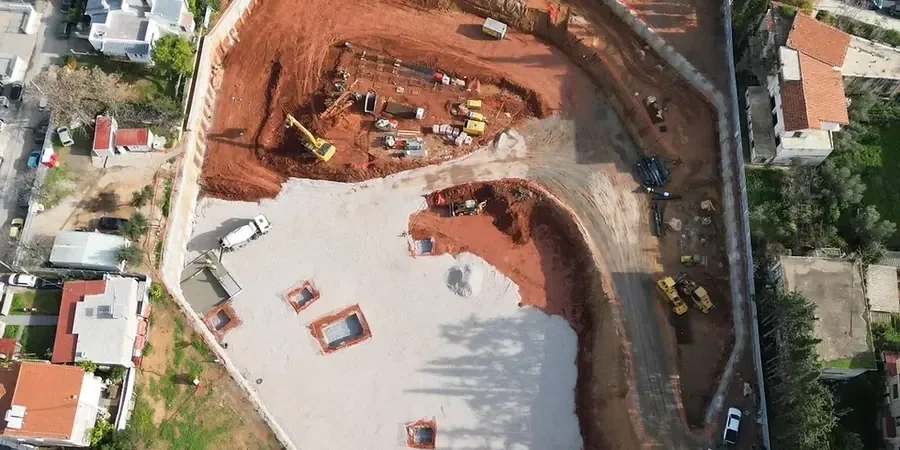
Excavations in Maple Ridge require a thorough understanding of the local geology, which is dominated by glacial till, glaciomarine sediments, and bedrock formations typical of the Fraser Valley. These projects—ranging from utility tunnels and hydroelectric conduits to building basements and stormwater storage systems—demand a geotechnical framework that addresses soil stability, groundwater control, and rock mass behaviour. A comprehensive investigation is the critical first step, combining historical data review with targeted subsurface exploration to map stratigraphy and identify potential hazards such as boulders, artesian conditions, or soft clay lenses. Compliance with the BC Building Code and relevant CSA standards, including CSA Z317 for underground infrastructure, ensures that every excavation is planned with public safety and structural integrity in mind.
Our methodology for underground excavation design in Maple Ridge is grounded in Canadian standards and advanced in-situ techniques. We rely on Cone Penetration Test (CPT) profiling to continuously measure tip resistance, sleeve friction, and pore pressure, providing high-resolution data on soil layering and consistency without the disturbance of traditional drilling. This is complemented by In-Situ such as pressuremeter tests in boreholes to derive deformation moduli for numerical modelling of excavation support systems. All procedures align with CSA A23.3 for concrete design in underground structures and CAN/BNQ 2501 for geotechnical site investigations, ensuring our recommendations for temporary shoring, rock bolting, or permanent lining systems meet rigorous national benchmarks.
In Maple Ridge, typical underground excavation projects include trenchless pipe installations beneath the Lougheed Highway, deep foundation pits for mixed-use developments near Haney Bypass, and blasted chambers for district energy networks. Each scenario presents unique challenges, from maintaining safe slope angles in saturated silts to controlling vibrations during rock excavation near heritage structures. For shallow utility trenches, we often perform a field density test (sand cone method) to verify compaction of backfill materials, ensuring long-term resistance to settlement. Our team integrates laboratory-derived parameters—such as shear strength from direct shear tests and compressibility from consolidation testing—directly into stability analyses, allowing for optimized cut geometries and support sequencing that minimize risk and construction cost.
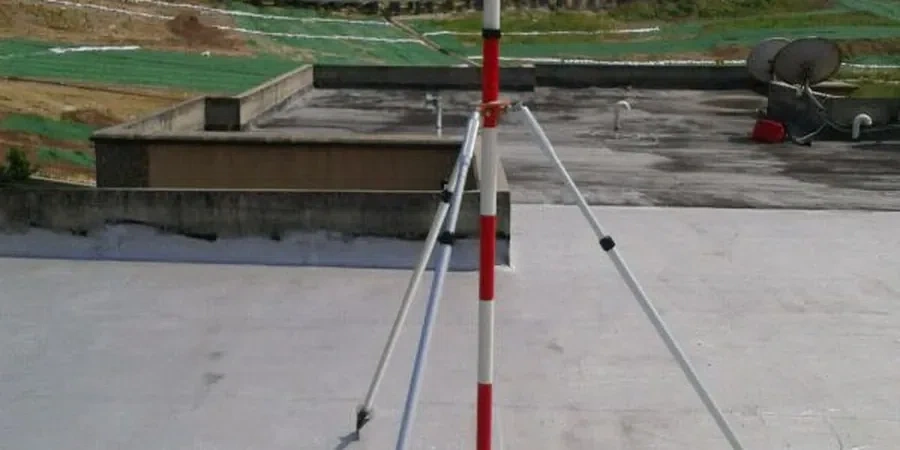
From initial site characterization through construction monitoring, our underground excavation process delivers clarity and control. Subsurface samples are analyzed in our laboratory for grain size analysis (sieve + hydrometer) and Atterberg limits, defining the soil’s engineering classification and its susceptibility to groundwater-induced instability. These results feed into geotechnical reports that specify excavation methods, dewatering requirements, and foundations for any integrated structures. The final deliverable is a defensible excavation plan that meets WorksafeBC regulations, reduces the likelihood of costly delays from unforeseen ground conditions, and provides Maple Ridge developers and contractors with a reliable basis for safe, efficient underground construction.