In Maple Ridge, slope engineering must account for the complex glacial till and steep river valley topography that define the local terrain. Our geotechnical approach integrates subsurface investigation with [slope stability analysis](slope-stability) to evaluate failure mechanisms under both static and seismic loading, consistent with the BC Building Code and guidelines from Engineers and Geoscientists BC. For sites where geometry or weak soil layers compromise natural stability, we often recommend reinforcement through [active/passive anchor design](anchors) to transfer loads into competent strata and achieve required factors of safety.
Residential subdivisions along the Alouette River corridor and infrastructure projects on the escarpments of Silver Valley routinely demand engineered solutions to manage long-term erosion and surcharge risks. Where space constraints or right-of-way limits prevent regrading, [retaining wall design](retaining-walls) provides a robust alternative that can be combined with anchored systems for deep-seated stability. Each assessment delivers practical, permit-ready recommendations aligned with municipal geotechnical review requirements.
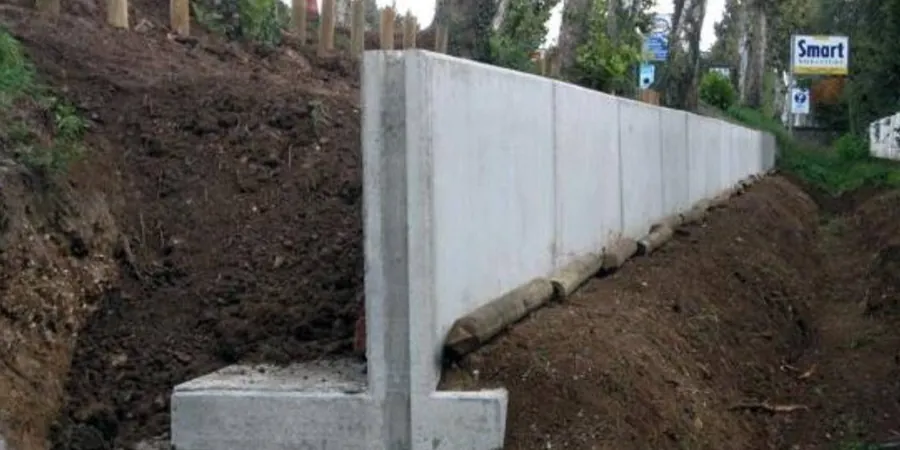
Slope stability assessments in Maple Ridge address the evaluation and management of natural and engineered inclines, where the complex glacial geology of the Fraser Valley demands rigorous geotechnical investigation. The area's terrain, shaped by Pleistocene glaciation, features a mantle of glacial till, glaciomarine silts, and outwash sands overlying bedrock, creating conditions prone to shallow slumping and deep-seated rotational failures, particularly during the wet winter months. Our work is governed by the BC Building Code, which references national standards including the Canadian Foundation Engineering Manual, and is guided by local municipal requirements for hillside development and the geohazard mapping provided by the District of Maple Ridge. A successful project begins with a comprehensive geotechnical investigation to define the subsurface stratigraphy and groundwater regime, which is the critical foundation for any reliable slope design.
The methodology for slope analysis in Canada follows a standardized, defensible process rooted in the principles of limit equilibrium and observational monitoring. We characterize soil shear strength through advanced In-Situ and direct measurement, with the cone penetration test (CPT) providing a high-resolution, continuous profile of pore pressure and tip resistance, which is exceptionally effective in identifying the soft, sensitive silt layers common in the Maple Ridge area. These field measurements are calibrated with a suite of laboratory tests on undisturbed samples, including direct shear and triaxial compression, complemented by Atterberg limits to precisely classify the fine-grained soils and assess their plasticity and potential for volume change. The analysis incorporates the required seismic parameters from the National Building Code of Canada for the Metro Vancouver region, ensuring the design meets the stipulated factor of safety for both static and pseudo-static loading conditions.
Typical projects in Maple Ridge span from evaluating stability for new single-family foundations on the slopes of Silver Valley to critical infrastructure protection along the Alouette River corridors. We frequently consult on the rehabilitation of aging dike systems and the assessment of post-landslide terrain, where understanding the failure mechanism is paramount. For hillside residential construction, our assessments are directly integrated with foundation design, particularly where steep grades necessitate the use of pin piles or caissons to transfer loads beyond a potential failure surface into competent material. The effectiveness of structural backfill and drainage measures is often verified through a field density test (sand cone method) during construction, ensuring that retaining structures and engineered fills meet the compaction specifications essential for long-term stability and drainage performance.
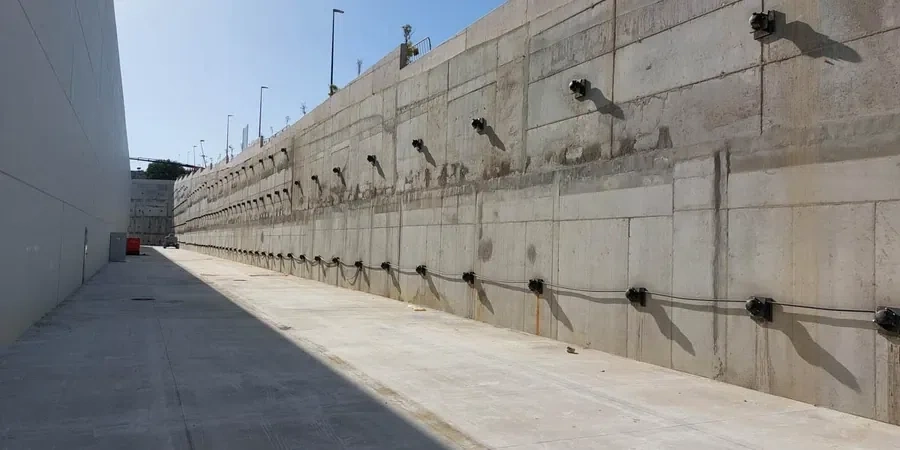
Our process delivers a clear, actionable slope stability report that moves from geological characterization to stability modeling and practical recommendations. The compilation of data from grain size analysis (sieve + hydrometer) informs material behavior models, while our final deliverables provide explicit design parameters for foundations, retaining walls, and surface water management. The essential value is a geotechnical rationale that is technically rigorous and defensible to municipal reviewers, translating complex soil mechanics into safe, cost-effective construction on Maple Ridge's challenging terrain, where proactive mitigation of landslide risk is a direct investment in property security and long-term asset resilience.