Improvement in Maple Ridge addresses the challenge of building on the region’s variable surficial geology, where loose alluvial sands and compressible silts along the Fraser River floodplain often fail to meet bearing or settlement requirements under the British Columbia Building Code. Engineered solutions densify or reinforce these deposits to support foundations, embankments, and slabs without deep excavation. Two primary techniques applied locally are [stone column design](stone-columns), which installs compacted gravel columns to stiffen soft cohesive soils, and [vibrocompaction design](vibrocompaction), which rearranges granular particles into a denser state using depth vibrators, both conforming to CSA and CFEM guidelines for seismic resilience.
Typical projects demanding Improvement include low-rise residential subdivisions, warehouse pads, and road widenings where native soils exhibit liquefaction potential or excessive differential settlement. These methods also integrate with preloading and groundwater management strategies to accelerate consolidation and improve long-term performance. By pairing targeted densification with rigorous site-specific design, developers in Maple Ridge achieve compliant, buildable ground without resorting to costly deep foundations.
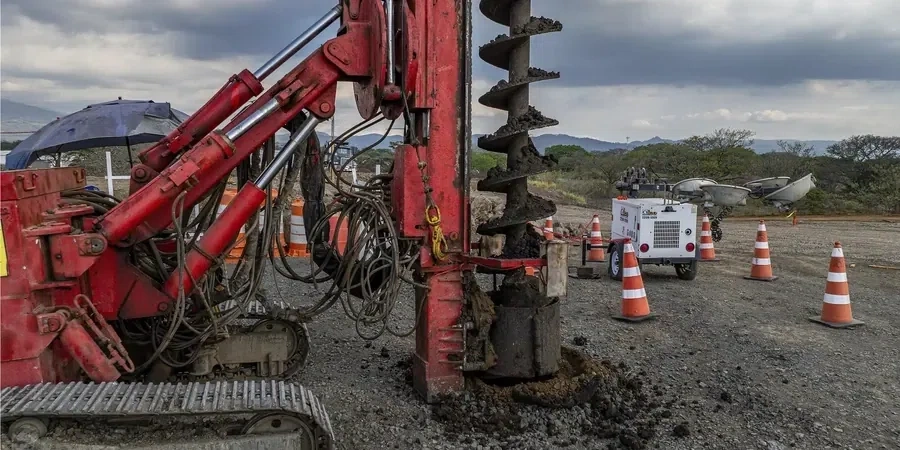
Improvement in Maple Ridge addresses the challenge of building on the variable soils of the Fraser Valley, where soft, compressible silts and clays, loose alluvial sands, and pockets of organic deposits are common. Our approach begins with a thorough geotechnical investigation to characterize the subsurface profile, which is critical given the area's complex glacial and post-glacial geology. This investigation is guided by the requirements of the BC Building Code and CSA A23.1, which mandate a defined level of geotechnical input for any structure. Key in-situ methods, such as the Cone Penetration Test (CPT), are essential for continuously profiling these soft soils and identifying liquefiable layers, providing data that directly informs the selection and design of an appropriate Improvement strategy.
The methodology for designing a Improvement program in Canada relies on a rigorous combination of In-Situ and laboratory analysis to meet National Building Code of Canada (NBCC) performance standards, particularly for seismic resilience. Beyond CPT data, we perform targeted In-Situ to measure soil strength and stiffness directly. Disturbed and undisturbed samples are carefully recovered for advanced laboratory testing, which includes grain size analysis using both sieve and hydrometer methods to precisely classify the fines content. This is complemented by Atterberg limits testing to define the plasticity characteristics of cohesive soils. This integrated data set allows us to model settlement under load, assess the potential for strength loss during an earthquake, and calibrate design parameters for techniques ranging from dynamic compaction and stone columns to rigid inclusions.
Typical projects in Maple Ridge reflect the region's mix of residential expansion, commercial hubs, and essential infrastructure on challenging ground. We frequently design improvement schemes for new foundations of multi-family housing on former agricultural lands where thick, compressible clay layers would otherwise cause unacceptable long-term settlement. For industrial and commercial buildings in the Albion Flats, mitigating liquefaction risk is often the primary driver, requiring densification of loose, saturated sands. Infrastructure projects, such as road embankments over soft ground, rely on techniques like preloading with wick drains, which we design and monitor using precise field density testing with the sand cone method to verify compaction of the structural fill placed above the improved subgrade.
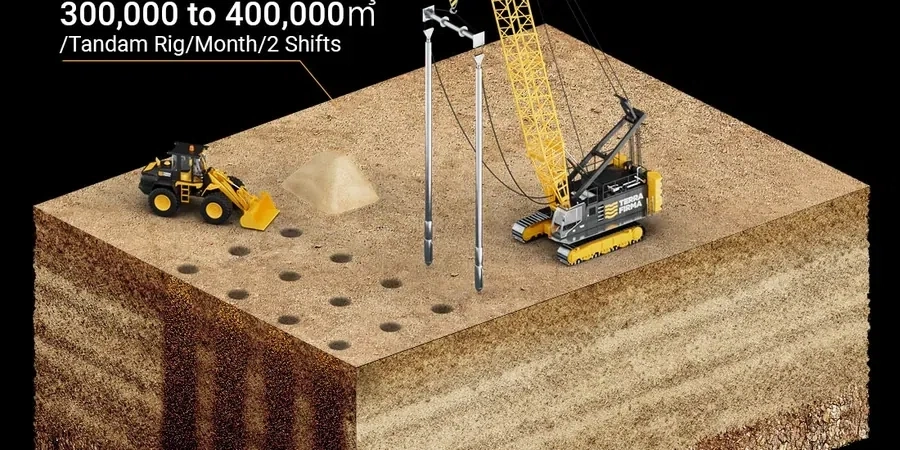
Our process translates site-specific geology into a performance-based Improvement design and a verifiable construction outcome. The final deliverable is a comprehensive report containing a clear design rationale, detailed technical specifications, and a field verification program. This program typically uses post-improvement CPT testing and load tests to confirm that the treated ground meets the specified modulus, settlement, and shear strength criteria. For developers and contractors in Maple Ridge, this provides a single, defensible solution that transforms problematic soils into a reliable, engineered foundation medium, effectively managing construction risk and ensuring long-term performance for any structure.