In-Situ in Maple Ridge provides direct measurement of subsurface conditions without sample disturbance, a critical advantage given the area’s variable glacial till, alluvial deposits, and pockets of soft Fraser River sediments. These field methods confirm design assumptions and verify compaction quality during construction, aligning with the requirements of the British Columbia Building Code and CSA A23 standards for earthworks. A fundamental procedure for earthfill QA/QC is the field density test (sand cone method), which accurately determines in-place soil density and moisture content to validate layer-by-layer compaction compliance.
This category of testing is integral to foundation design for residential subdivisions, commercial pads, and municipal infrastructure like road widenings and utility trenches throughout Maple Ridge. Geotechnical engineers rely on continuous data from cone penetration tests and pressuremeter assessments to refine bearing capacity and settlement predictions in near-surface silts and deeper glaciolacustrine clays. Complementing density verification, our field density testing services are routinely paired with laboratory proctor curves to establish target specifications, ensuring engineered fills meet long-term performance criteria under the region’s high rainfall conditions.
In‑situ testing in Maple Ridge provides direct geotechnical parameters without disturbing the natural fabric of the soil, a critical advantage in the complex glacial and alluvial deposits of the Fraser Valley. Local geology typically features a veneer of silty clay, loose to compact sand, and gravelly till overlying sedimentary bedrock, often with a high water table that challenges conventional sampling. Our geotechnical investigation services integrate field testing programs that comply with the BC Building Code and reference CSA A23.1/A23.2 and ASTM standards, ensuring every test is adapted to Maple Ridge’s variable ground conditions. By combining cone penetration testing (CPT) with selective sampling, we map stratigraphy, identify liquefiable layers, and measure pore pressure response in real time, giving engineers a reliable basis for foundation design and seismic assessment.
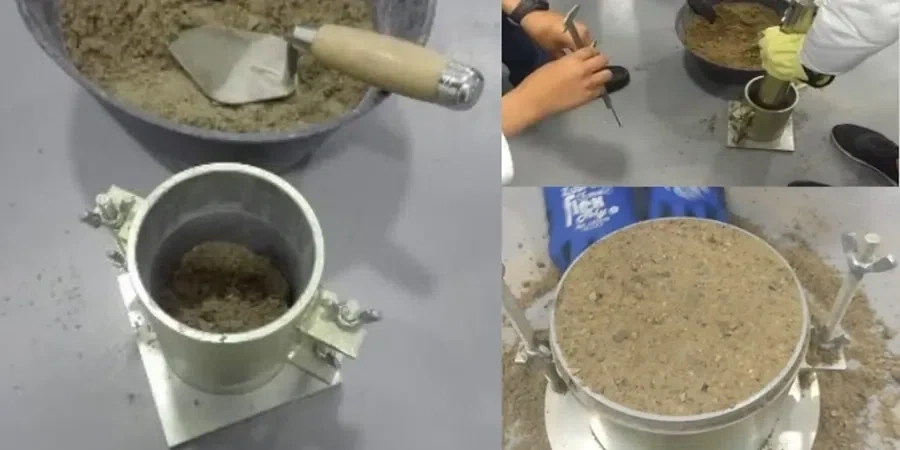
Canadian practice demands rigorous adherence to standardized methods, and our in‑situ program follows the procedures set out in the Canadian Foundation Engineering Manual and relevant CSA/ASTM protocols. We deploy electric friction‑cone penetrometers with u2 pore‑pressure sensors per ASTM D5778, recording tip resistance, sleeve friction, and dynamic pore pressure to derive soil behaviour type and undrained shear strength profiles. Where granular soils prevail, the sand cone density test (ASTM D1556) verifies compaction of structural fill, road subgrade, and utility trench backfill, giving inspectors an immediate pass‑fail criterion tied to the project’s specified relative compaction. All field data are logged into cloud‑based acquisition systems, allowing our laboratory team to cross‑reference in‑situ results with index testing from Shelby tube or split‑spoon samples, creating a closed‑loop quality framework that satisfies municipal approval requirements in Maple Ridge.
Typical projects in Maple Ridge—from single‑family homes on sloping lots in Silver Valley to multi‑storey mixed‑use buildings along Lougheed Highway and light industrial expansions in the Albion flats—rely on in‑situ testing to reduce foundation risk and optimize earthworks. A CPT‑based liquefaction assessment, for instance, quantifies the factor of safety against cyclic softening in the loose sand lenses common near the Fraser River, directly influencing the need for Improvement or deep foundations. On subdivision developments, field density testing during mass grading confirms that engineered fill meets the compaction curves previously established through Atterberg limits and moisture‑density relationship testing, preventing post‑construction settlement that could damage pavements and buried utilities.
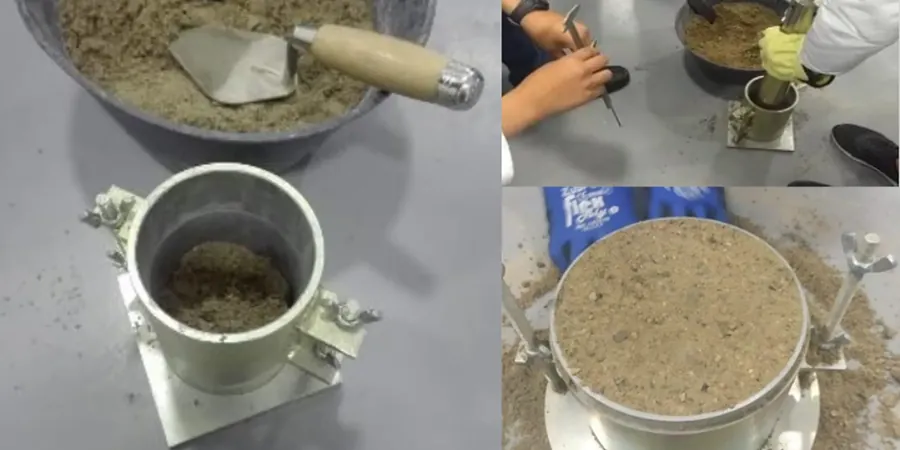
The process begins with a site‑specific test plan that selects the appropriate techniques—CPT, sand‑cone, vane shear, or pressuremeter—based on the anticipated soil profile and structural loads. Our operators mobilize a track‑mounted penetrometer or portable density apparatus, execute the field program under the supervision of a professional engineer, and deliver a signed, sealed report within days of completion. Clients receive a single document containing corrected CPT logs, density test summaries, interpreted engineering parameters, and clear recommendations for foundation bearing capacity, settlement, and seismic design. Paired with grain size analysis and other index tests from our lab, the in‑situ data forms a defensible, code‑compliant geotechnical baseline that accelerates permit reviews and gives Maple Ridge developers the confidence to break ground without unexpected ground conditions derailing the schedule.